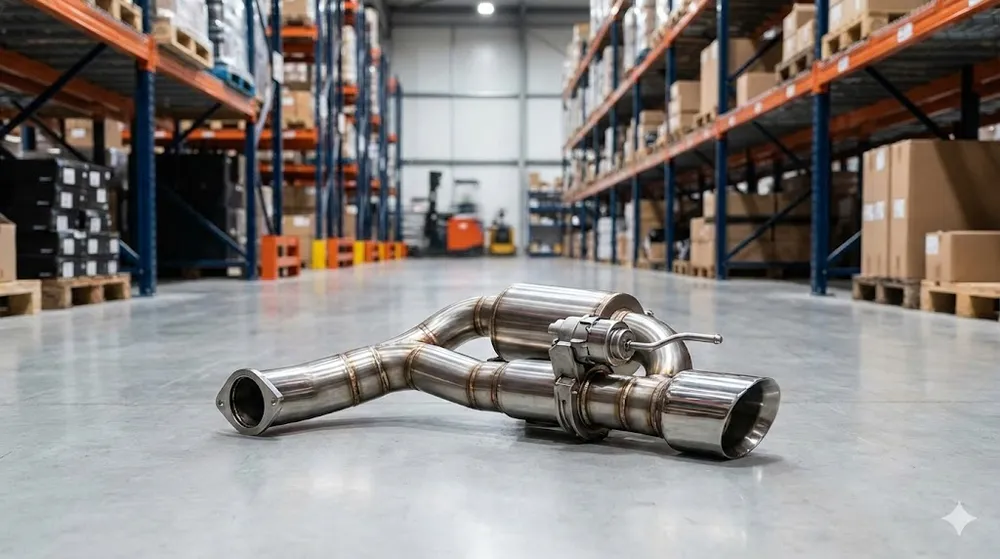

For many car enthusiasts, the sound of an engine is its soul. A deep, aggressive roar can make a vehicle feel powerful, while a quiet, refined hum suggests luxury and comfort. However, creating this “perfect note” is not an accident. It is the result of complex physics and precision engineering. At Hongshuntong (HST) Valved Mufflers Factory, we have spent over a decade perfecting this balance through advanced R&D and manufacturing.
What Creates the Exhaust Sound?
To understand the perfect note, we must first understand how sound is made. When an engine runs, it releases high-pressure gas in pulses. These pulses create sound waves that travel through the exhaust pipes.
Sound is defined by two main factors:
-
Frequency: This determines the “pitch.” High frequencies sound sharp and raspy, while low frequencies sound deep and “bass-heavy.”
-
Amplitude: This determines the volume. More pressure usually means a louder sound.
Precision engineering allows us to manipulate these waves. By changing the diameter of the pipes or the internal structure of the muffler, we can “tune” the exhaust just like a musical instrument.
Material Science: Why T304 Stainless Steel is the Standard
The material used to build an exhaust system significantly impacts the final sound. In high-performance B2B markets, T304 Stainless Steel is the industry leader for several reasons:
-
Resonance: T304 steel has specific density properties that allow it to resonate without creating “tinny” or “cheap” metallic vibrations.
-
Durability: As an ISO-standard compliant manufacturer, we use high-grade steel to ensure the sound remains consistent over the years without being altered by rust or cracks.
-
Wall Thickness: Precision engineering requires a specific wall thickness. If the walls are too thin, the exhaust sounds raspy; if they are too thick, the system becomes too heavy.
By strictly adhering to these material standards, we ensure that the “quality” of the sound matches the “quality” of the build.
The Internal Architecture: Resonators and Mufflers
The magic happens inside the muffler. If you look at the internal components, such as high-flow resonators, you will see perforated tubes and specialized packing materials.
How it works:
-
Perforations: Small holes in the internal pipes allow sound waves to escape into a surrounding chamber.
-
Sound Absorption: The chamber is often filled with high-temperature glass wool or steel wool. This material absorbs high-frequency “noise” while letting the deep, desirable low frequencies pass through.
-
The Spiral Core: Some designs use a spiral-shaped internal structure to help exhaust gases flow faster while smoothing out the sound waves.
Valved Technology: The Power of Choice
One of the biggest innovations in the last decade is the Valved Muffler Kit. This technology solves the oldest problem in exhaust design: how to be quiet in the city but loud on the track.
-
Valve Closed: The exhaust gas is forced through a longer, more restricted path inside the muffler. This uses more “baffles” to cancel out noise, making the car quiet and neighbor-friendly.
-
Valve Open: The valve opens to create a “bypass”. The gas takes a shorter, more direct path with less restriction. This results in a raw, high-performance sound and increased engine efficiency.
Our specialized domestic manufacturing focuses on these universal valved muffler kits, allowing drivers to switch their “exhaust note” at the press of a button.
Why Precision Engineering Matters for B2B Partners
For distributors and modification shops, the “Science of Sound” is a business advantage. When an exhaust system is engineered with precision:
-
Zero Defects: Following ISO standards means every unit sounds the same, protecting your brand reputation.
-
Perfect Fitment: Precision engineering ensures that components like bypass systems and mufflers fit the vehicle perfectly, reducing labor time for your mechanics.
-
Customer Satisfaction: When a client hears that perfect, crisp note, they know they have purchased a high-end product.
Conclusion: More Than Just a Pipe
The perfect exhaust note is a blend of 14 years of manufacturing history, high-grade materials, and a deep understanding of acoustics. At HST, we don’t just sell metal pipes; we sell the “Soul of Sound.” Whether it is a universal kit or a custom solution, precision engineering ensures that every note is exactly as intended.